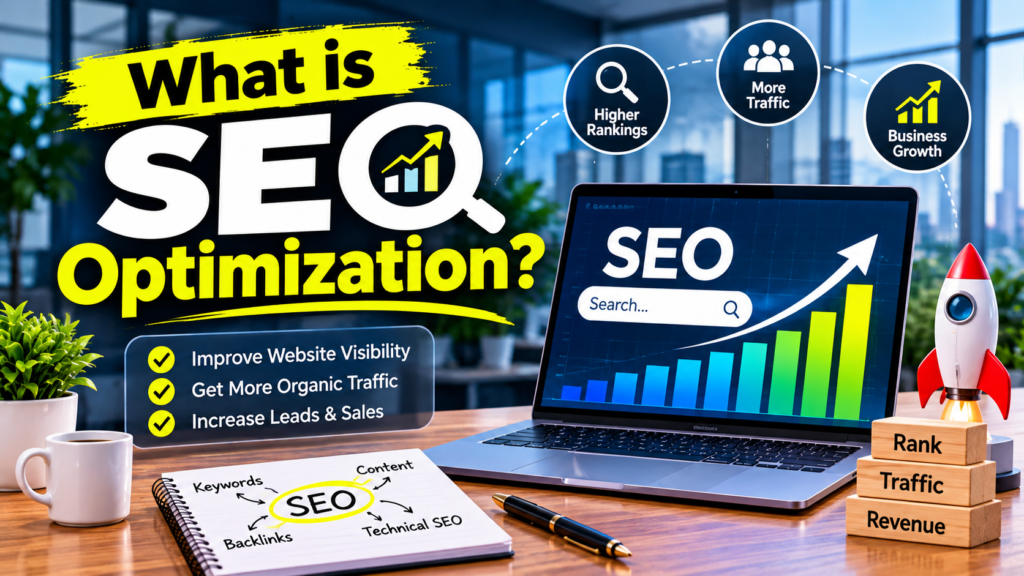
Search Engine Optimization (SEO) is a specialized digital growth framework engineered to scale your website’s organic visibility across Search Engine Results Pages (SERPs). Every second, millions of global users turn to search engines like Google to resolve complex queries, discover products, and find enterprise services. Winning this premium digital real estate depends entirely on how seamlessly your seo and website structural architecture aligns with modern algorithmic retrieval systems.
When targeting high-volume, high-Keyword Difficulty (KD) search terms, standard optimization protocols often fall short against dominant authority brands. However, by leveraging advanced semantic entities, structural data formatting, and elite user utility metrics, smaller platforms can systematically outrank legacy competitors. This comprehensive, master-level blueprint breaks down the technical parameters, content deployment models, and algorithmic parameters required to dominate competitive search landscapes.
Global Keyword Architecture Matrix
To successfully rank for hyper-competitive terms, keywords must be injected organically into clear search intent buckets rather than forced artificially into thin text walls:
- Foundational Concept: seo optimization (Search Intent: Informational / High Commercial Intent)
- Actionable Strategy: how to improve seo (Search Intent: Step-by-Step Practical Execution)
- Core Definition: what is seo optimization (Search Intent: Deep Educational Blueprint)
- Tactical Execution: seo optimization tips (Search Intent: Advanced Performance Optimizations)
- Infrastructure Link: seo and website (Search Intent: Technical Foundation & Architecture)
Demystifying the Core: What is SEO Optimization?
To fully comprehend what is seo optimization, you must look beyond basic content creation or outdated keyword density formulas. True web optimization is an ongoing technical calibration that signals absolute authoritative relevance to search indexers.
Modern search algorithms process web data through three fundamental optimization lenses, each serving as a critical pillar for ranking high-difficulty terms:
- On-Page Optimization: Mapping semantic entities, configuring precise header hierarchies, optimizing HTML metadata, and structuring content depth to thoroughly satisfy specific user intent.
- Technical Infrastructure: Engineering rapid server configurations, ensuring responsive crawling patterns, liquid layouts for mobile devices, and secure data transmission protocols.
- Off-Page Equity: Accumulating contextually relevant backlink signals, cultivating brand velocity, and scaling third-party domain authority indicators.
When these three operational pillars are perfectly executed, your seo and website performance operates in unison, satisfying Google’s complex ranking quality systems. If your foundational layout is flawed, even high-quality writing will fail to rank in highly competitive niches.
Algorithmic Mechanics: How Search Engines Process Your Domain
Before executing advanced optimization tactics, it is crucial to understand the linear pipeline search engine crawlers use to evaluate and rank your platform.
Discovery & Crawling
Automated search bots (such as Googlebot) discover your domain infrastructure and systematically parse through your raw HTML, Javascript files, and asset pipelines.
Parsing & Indexing
Once crawled, search engines analyze the semantic layout of your pages and catalog them within a massive global database (the Search Index) based on contextual relevance.
Algorithmic Evaluation & Ranking
When a user types a query, the search engine extracts the most authoritative, technically sound, and useful assets from its index to present on the first page. If your site suffers from deep rendering blocks, slow server responses, or messy site links, crawlers will reduce your crawl budget, preventing your content from being accurately indexed or ranked.
The Authority Blueprint: How to Improve SEO for Competitive Markets
To outpace well-established competitors on phrases with severe keyword difficulty, you must transition from standard copywriting to advanced semantic content engineering. This is how to improve seo metrics at an enterprise level:
Information Gain Optimization
Google actively downranks redundant content that merely restates facts already present on the first page of search results. To win the ranking algorithm, your articles must maintain a high Information Gain Score. This means injecting proprietary data assets, original corporate case studies, custom infographics, or unique technical steps that do not exist anywhere else on the web.
Semantic Entity Injection
Modern search logic shifts from basic keyword strings to interconnected concepts (Entities). Instead of repeating the phrase what is seo optimization multiple times, populate your paragraphs with highly related semantic entities like “Google Search Console,” “Search Intent,” “XML Sitemaps,” “Structured Data,” and “Algorithm Updates.” This demonstrates deep, comprehensive subject coverage to NLP (Natural Language Processing) engines.
The Topic Cluster Model
Single articles rarely rank for massive keywords without an established network of contextual support. Implement a strict Pillar-Cluster content design:
- The Pillar Page: A broad, definitive master resource that introduces an entire industry topic (such as this global guide).
- The Cluster Pages: Highly focused, narrow child articles addressing sub-topics (e.g., “The Technical Guide to XML Sitemaps” or “How to Fix Indexing Errors”).
- Internal Link Architecture: Hyperlink all cluster pages back to the root pillar page using contextually rich anchor text to centralize domain authority.
Advanced Playbook: 5 Elite SEO Optimization Tips
To gain a competitive edge over legacy brands, deploy these five highly actionable seo optimization tips across your web properties:
- Maximize Interaction to Next Paint (INP)
With Core Web Vitals heavily weighting page interactivity, ensuring zero execution latency is a direct ranking factor. Defer non-essential JavaScript, eliminate render-blocking CSS files, compress massive tracking scripts, and deploy premium Anycast Content Delivery Networks (CDNs) to keep your global site interactions fast and fluid. - Deploy Flawless Schema Markup Codes
Translate your visual content into machine-readable data by injecting structured Schema.org JSON-LD arrays into your page headers. For informative guides, always configure Article Schema, Breadcrumb Schema, and FAQ Schema. This directly elevates your opportunity to capture Rich Snippets on SERPs, drastically multiplying your organic CTR (Click-Through Rate). - Establish a Clean Heading Hierarchy
Headings are structural index parameters, not design tools. Ensure your page contains exactly one main H1 tag matching your target title. Distribute secondary target variations such as seo optimization and how to improve seo into logical secondary (H2) and tertiary (H3) sections to clearly segment your technical topics for automated search scrapers. - Optimize Contextual Anchor Links
Eradicate generic internal linking text like “click here” or “read more.” Search engines use anchor phrases to understand the programmatic target of a hyperlink. Use hyper-descriptive anchor text strings such as “…as outlined in our comprehensive technical website ranking strategies guide, you must update your files regularly.” - Programmatic Mobile-First Calibration
Over half of global search traffic originates from mobile devices, and Google indexes websites based exclusively on their mobile rendering engines. Audit your pages weekly inside Google Search Console to guarantee text elements scale cleanly, tap targets remain accurately separated, and no content overflows horizontally off the mobile viewport.
Google Quality Guidelines & Monetization Compliance
If your primary goal is maximizing digital ad placement yield through networks like Google AdSense, your content must strictly adhere to the helpful content guidelines:
- E-E-A-T Adherence: Google ranks text based on demonstrated Experience, Expertise, Authoritativeness, and Trustworthiness. Ensure your guides offer real, actionable insight rather than surface-level definitions.
- Elimination of Thin Content: Low-value, short descriptions fail to satisfy long-term search demands. Maintain a comprehensive word count layout (minimum 1,200+ words) to secure index approval and command higher premium ad bidding.
- User-First Visual Experience: Avoid aggressive ad placements that break text reading paths or overlap core navigation buttons. Maintain a clean, fast-loading, readable ratio between content blocks and visual media blocks.
Conclusion
Securing top rankings for high-volume keywords is an iterative engineering process that demands absolute technical precision and authoritative content development. By seamlessly uniting a clean URL architecture, meticulous schema deployment, and high-value informational assets, you create a powerful synergy between your seo and website assets. Consistently applying these advanced seo optimization mechanics will allow you to break through high-KD barriers, capturing long-term organic traffic, high-ticket business leads, and sustainable premium ad revenue.